In the world of physics, few discoveries challenge our intuition as much as the idea that light could travel at different speeds depending on its direction. For decades, efforts to demonstrate nonreciprocal group delay have been hindered by excessive losses and limited effects. Yet a recent breakthrough in cavity magnonics has achieved a significant demonstration of this phenomenon, without violating fundamental laws like the Kramers–Kronig relations. This discovery taps into the fascinating hybrid interaction between photons and magnons, leveraging magnism to manipulate light in ways previously out of reach.
Read MoreYear: 2026
Northwestern Medicine Doctors in Chicago Saved a Patient After Removing Both Lungs
The man from Missouri should have been dead by spring 2023. By the time a medical helicopter delivered him to Northwestern Memorial Hospital on a rolling bed of tubes and machines, his body was already struggling to survive. What started as a seasonal flu had curdled into a resistant infection that was essentially melting his lungs from the inside.
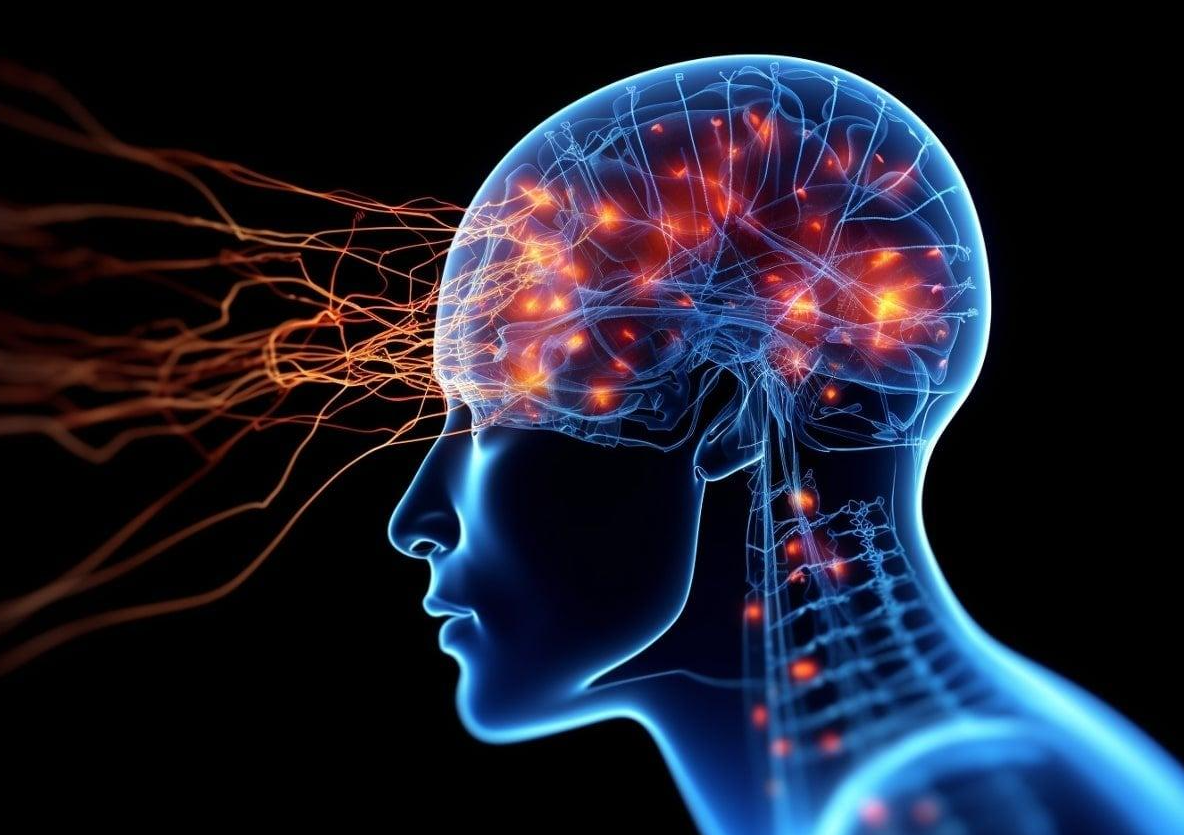
Read MoreOCD Isn’t About Needing Certainty, It’s About a Brain That Can’t Update Beliefs
Each one of us, sometimes or the other has this weird habit or maybe obsession of checking if we’ve locked the front door or not. You check once, locked. Check again, still locked. Third check. Fourth check. By the tenth check, you’re not actually discovering anything new, yet you can’t shake the doubt. For people with obsessive-compulsive disorder, this scenario is almost… daily. These individuals aren’t indecisive because they can’t think clearly. Instead, recent neuroscience research reveals that their brains struggle to update beliefs based on new information. A study…
Read MoreThe Sphere Model of Consciousness and Identity Beyond Computation
What if consciousness isn’t about being smart, but about being stuck? I’m sure there comes a time in most of our life, when we’re standing at a crossroad, torn between two paths. Your logical mind says one thing, your gut says another, and the longer you stand there wrestling with the choice, the more uncomfortable you become. That tension, that sense of being trapped between incompatible options, might be the secret ingredient missing from artificial intelligence.
Read MoreMeasuring Earth From the Moon
When was the first time you heard the term, “earthshine”? For me it was while I was reading Arthur C. Clarke’s Earthlight, and there was this passage where colonists on the Moon looked up at Earth hanging in their sky.
Read MoreAI Is Learning to Predict and Control Cell Fate with scDiffEq
Have you ever realized that at the very beginning, you started out as just one tiny cell. From that single cell, all the different parts of your body, like your brain cells, heart muscles, blood cells, even skin developed. The question is, how does that one original cell somehow “know” what to turn into? How does it decide to become a brain cell or a heart cell, instead of just staying the same?
Read MoreAdaptive Architecture Powered by Mini Robots That Can Bloom
I’m not really into top-down approaches. I believe that in most effective systems, decisions happen at the individual level. For instance, take the case of ants or bees, while there’s structure, there isn’t constant centralized control. Individuals act based on local information, and coordination emerges naturally without waiting for hierarchical alignment.
Read MoreBook Review: Astronautics by Ulrich Walter
I’ve never been particularly good at math (at school) and when it comes to physics, the equations made me squint. And yet, I find myself completely captivated by the mechanics of how we fling those massive capsules filled with humans into space. And somehow bring them back alive.
Read MoreRetina-Inspired LiDAR and the Shift Toward Adaptive Machine Vision
Have you ever noticed that our eyes don’t focus on every single brick in every building with the same intensity as when we are walking down the street? Instead, our brain “gazes”, narrowing its focus on, which it thinks is super important, like a child chasing a ball towards the road or a cyclist drifting too close. Everything else stays in view, but it fades into the background, without demanding any attention. This is our macula at work, delivering sharp detail exactly where our attention is needed most.
Read MoreBook Review: Cybernetics by Norbert Wiener
What if our brain is actually a computer? I can trace that thought back to growing up with Small Wonders on television in the mid-1990s (in India it was aired during the times). That strange little serial where a machine didn’t just calculate, but learned and slowly began to feel familiar.
Read More